
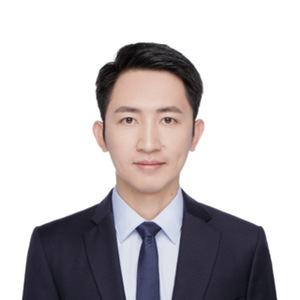
Speaker:Zhang Zhenzhen (Tongji University)
Time: 10:00 AM
Date: July 28th, 2025 (Monday)
Location: RoomA208, Economics and Management Building
Abstract: We study an airline fleet assignment problem under demand uncertainty, where the airline aims to maximize its expected total profit by determining the aircraft type assigned to each flight leg and the seat capacity reserved for each itinerary. We consider a data-driven setting that leverages historical observations of demand and the associated contextual information or covariates, where the fleet assignment decision and price information serve as key covariates affecting the underlying demand. Also, the price estimates employed in the planning stage can be different from the price realizations in the operational stage, leading to a phenomenon of price shift. We construct a decision-dependent predicted demand distribution leveraging a demand prediction model of multivariate regression with fixed designs (e.g., fleet assignment and price) and random covariates (e.g., seasonality), and develop a contextual distributionally robust model regularized with Wasserstein distance that hedges against the distributional ambiguity induced by the predicted demand distribution. We establish finite-sample performance guarantee and asymptotic optimality, impacted by the price shift, of the model solution, under several regularity conditions. We also analytically measure the value of decision dependency via analyzing the performance gap induced by the decision-omitted bias in the predictive modeling. Computationally, leveraging a reformulation of the contextual robust model, we show the proposed contextual robust airline fleet assignment model can be transformed into a mixed-integer linear program, without inducing additional integers to the assignment decisions. In addition, we also extend the model to hedge against the ambiguity on the price shift using ϕ-divergence. Extensive numerical experiments with real-life airline fleet operational data demonstrate the effectiveness of our proposed framework.